
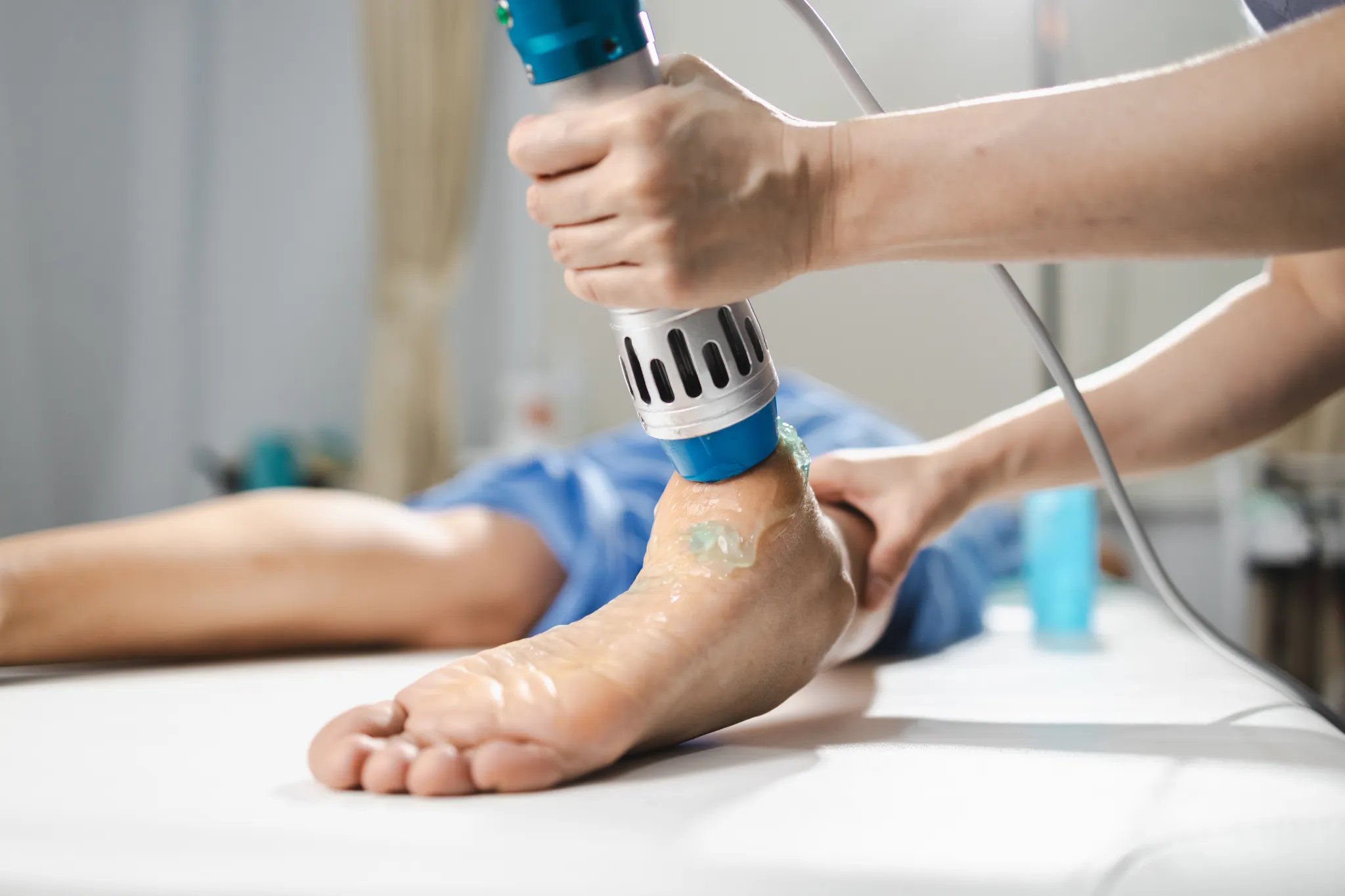
 Recent clinical meta-analyses reveal that the ESWT success rate for plantar fasciitis consistently falls between 80% and 88% for patients who haven't found relief through traditional methods. If you've spent months managing the stabbing sensation of a damaged plantar fascia, you likely feel trapped between the failure of conservative treatments and the daunting prospect of invasive surgery. It's a common frustration to see cortisone shots or generic orthotics provide only temporary reprieve while the underlying tissue degeneration remains unaddressed.
You deserve a recovery plan that's rooted in data rather than guesswork. In this review, we'll examine the evidence-based outcomes of shockwave therapy, including a 2025 study where pain scores dropped from 8.82 to 1.66 nearly 3 months after treatment. You'll discover how this technology stimulates cellular repair and why integrating a precise biomechanical assessment is the key to moving beyond symptom management toward true structural stability. We'll outline exactly what the clinical literature says about long-term satisfaction and how specialized intervention helps you regain mobility without the risks of surgical reconstruction.
Key Takeaways
Examine the clinical evidence demonstrating that the ESWT success rate for plantar fasciitis consistently reaches up to 88% for patients with chronic symptoms.
Explore the biological process of neovascularization, where shockwaves stimulate new blood vessel growth to transition chronic tissue degeneration back into an active healing state.
Compare the functional differences between Radial and Focused shockwave technologies to understand which application is most effective for your specific anatomical needs.
Recognize how underlying systemic conditions and activity management influence the speed and durability of your clinical recovery.
See why integrating biomechanical corrections, such as custom orthotics, is essential for addressing the root cause of heel pain and ensuring permanent relief.
Defining ESWT Success Rates for Plantar Fasciitis: What the Data Shows
When evaluating the ESWT success rate for plantar fasciitis, we must look beyond the immediate cessation of pain. In podiatric medicine, clinical success is defined as a significant reduction in symptoms paired with a measurable return to daily functional activity. While many conservative treatments offer temporary relief, Extracorporeal Shockwave Therapy is utilized to address the underlying pathology of chronic heel pain. Peer-reviewed literature, including various retrospective analyses, consistently places the success rate for this technology between 80% and 88% for patients who haven't responded to traditional care. This data suggests that for the 20% to 30% of patients whose condition becomes chronic, shockwave therapy represents the most viable path toward long-term resolution.
It's vital to distinguish between a temporary 'numbing' effect and true tissue regeneration. Unlike cortisone injections, which suppress inflammation but can lead to fascia weakening, shockwave therapy initiates a regenerative cascade. This process doesn't happen overnight. Patients often see a steady trajectory of improvement as the body repairs damaged fibers. This transition from chronic degeneration to active healing makes ESWT the gold standard for non-responsive cases, providing a bridge for those who have exhausted every other conservative option.
The Difference Between Patient Satisfaction and Clinical Resolution
Clinical milestones are often measured using the Visual Analog Scale (VAS). A 50% reduction in these pain scores is considered a significant clinical milestone, though many patients report much higher levels of relief. It's common for results to peak at approximately 12 weeks post-treatment because the biological repair of the fascia is a time-dependent process. Patient-reported outcomes often highlight a return to specific activities, like morning walks or standing at work, as the true indicator of success. We monitor these functional gains closely to ensure the treatment is effectively restoring the foot's structural integrity.
Success as an Alternative to Invasive Surgery
For many, the fear of surgery is a primary driver in seeking advanced non-invasive care. When we compare the 82% success rate of ESWT to the 65% success rate of a percutaneous plantar fasciotomy, the choice becomes clear. Shockwave therapy achieves superior results without the 'hidden' costs of surgery, such as extensive downtime, the risk of infection, or the formation of restrictive scar tissue. ESWT success is a cumulative biological response rather than an instant fix. By choosing a specialized intervention, you're opting for a method that preserves the natural anatomy of the foot while effectively stimulating the repair of the plantar fascia ligament.
Biological Mechanisms: How Shockwaves Stimulate Tissue Repair
The high ESWT success rate for plantar fasciitis isn't a result of simple masking; it's the outcome of a complex biological reset. When heel pain persists for months, the condition often shifts from acute inflammation to fasciosis. This is a state of degenerative failure where the body has essentially stopped attempting to repair the damaged tissue. High-energy sound waves create controlled micro-trauma within the fascia. This isn't damage for the sake of damage. It's a precise stimulus that restarts the healing cascade by transitioning the tissue from a dormant, degenerative state back into an active healing phase.
One of the most critical mechanisms involved is neovascularization. By triggering the growth of new capillaries, shockwaves restore blood flow to the poorly vascularized plantar fascia ligament. This influx of nutrients and oxygen is essential for maintaining structural integrity. Simultaneously, the therapy leads to the depletion of Substance P, a neurotransmitter responsible for transmitting pain signals. This creates an analgesic effect while the slower work of tissue repair begins. A clinical study on ESWT outcomes supports this approach, showing that 87% of patients viewed the intervention as successful because it addresses these biological foundations rather than just the symptoms.
Breaking the Cycle of Chronic Inflammation
Chronic heel pain is frequently a failure of the body'sinnate repair mechanisms. In many cases, the tissue becomes 'stuck' in a state of stalled healing. Pressure waves act as a mechanical trigger, forcing the tissue out of this dormant state and back into an acute inflammatory phase. While 'inflammation' often sounds negative, this controlled inflammatory trigger is the necessary precursor to long-term success. It recruits the cellular resources required to patch micro-tears and strengthen the ligament fibers. Understanding the ESWT success rate for plantar fasciitis requires recognizing that this 'restart' is what allows for permanent resolution.
Mechanical Transduction: Turning Sound into Cellular Action
Think of mechanical transduction as a wake-up call for your cells. The acoustic energy from the shockwave device is converted into biochemical signals within the cellular membrane. This process stimulates fibroblast activity, which are the cells responsible for collagen production. As collagen fibers reorganize and thicken, the fascia regains its natural elasticity and load-bearing capacity. Because this structural reorganization takes time, multiple sessions are typically required to build a cumulative biological effect. If you're ready to move beyond temporary patches, a heel pain consultation can determine if your tissue is a candidate for this regenerative approach.
Radial vs. Focused ESWT: Which Technology Yields Better Results?
Understanding the ESWT success rate for plantar fasciitis requires a closer look at the specific technology being utilized. Shockwave therapy is not a single, uniform treatment; rather, it's a category of acoustic energy applications that vary in depth, intensity, and focus. Many general practices utilize these technologies interchangeably, but a specialized clinical review suggests that matching the device to the specific pathology is essential for optimal recovery. Precision dictates the outcome. If the energy does not reach the exact site of tissue degeneration, the regenerative cascade described in previous sections cannot be fully realized.
The two primary modalities are Radial Pressure Waves (RPW)and Focused Shockwave Therapy (FSWT). While they are often grouped together, they behave differently once they contact the skin. Radial waves are technically pressure waves that spread outward and dissipate as they travel deeper into the foot. In contrast, focused shockwaves carry high energy to a specific, pre-determined focal point deep within the tissue. A specialist acting as a diagnostic detective uses these distinctions to tailor a treatment plan to the unique structural needs of your heel.
When to Use Radial Pressure Waves
Radial Pressure Waves are highly effective for treating broader areas of soft tissue and myofascial trigger points. During a session, the patient feels a strong vibratory sensation that covers a wide surface area. This technology is particularly useful for early-stage chronic plantar fasciitis where the tension is distributed across the arch rather than localized at the bone. Clinical success with radial waves often involves three to five sessions. Because the energy is superficial, it's excellent for stimulating blood flow in the outer layers of the fascia and surrounding musculature.
The Power of Focused Shockwaves
Focused Shockwave Therapy is the preferred choice for recalcitrant cases where the damage is concentrated at the calcaneal attachment, the point where the fascia meets the heel bone. FSWT can penetrate deep through the skin without losing energy, making it ideal for treating heel spurs or dense scar tissue that radial waves cannot reach. While the intensity is higher, the targeted nature of the energy often leads to faster resolution in severe cases. The best technology is the one that matches the depth of your specific injury. By selecting the correct modality based on diagnostic imaging or a thorough biomechanical evaluation, we ensure the ESWT success rate for plantar fasciitis remains high even for the most stubborn injuries.
Factors That Can Lower Your ESWT Success Rate
While clinical data confirms a high ESWT success rate for plantar fasciitis, these outcomes aren't universal. Success depends heavily on the biological environment of the foot and the systemic health of the patient. If the body's natural regenerative capacity is compromised, the 'restart' triggered by acoustic waves may struggle to gain momentum. For instance, patients with poorly managed diabetes or significant circulatory issues often experience slower results. Because shockwave therapy relies on neovascularization, or the growth of new blood vessels, any condition that restricts blood flow inherently limits the nutrients available for tissue repair.
The 'Cortisone Conflict' is another critical variable often overlooked in general practices. Recent steroid injections can actually lower the efficacy of shockwave therapy. Corticosteroids are designed to suppress the immune response and can lead to increased degeneration and thinning of the plantar fascia ligament over time. Since ESWT works by stimulating a controlled inflammatory response to jumpstart healing, the presence of residual steroids can counteract this process. We typically recommend a specific waiting period after an injection before beginning a shockwave protocol to ensure your tissue is receptive to regenerative forces.
The Problem with Uncorrected Overpronation or Oversupination
Biomechanical neglect is perhaps the most common reason for suboptimal outcomes. If a patient has uncorrected overpronation, where the arch collapses excessively during gait, the plantar fascia remains under constant, abnormal tension. Oversupination occurs when the foot rolls outward in walking. Even if shockwaves successfully repair the micro-tears in the ligament, the repetitive strain of an unsupported foot will likely cause the injury to recur. Treating the symptom without addressing the mechanical cause is a recipe for frustration. This is why a comprehensive biomechanical evaluation is essential; without it, you're merely patching a leak while the pressure continues to rise. To ensure your treatment addresses both the damage and the cause, schedule a heel pain consultation to review your foot structure.
Patient Compliance and Recovery Protocols
Success is a partnership between the technology and the patient's choices during the recovery phase. Returning to high-impact activity 'too much too soon' is a frequent pitfall that derails progress. It's vital to remember that a lack of pain doesn't immediately indicate that the tissue has regained its full structural integrity. The fascia requires time to reorganize its collagen fibers. Skipping prescribed stretching routines or ignoring recommended rest periods can lead to a breakdown of the newly forming tissue. We emphasize a gradual return to activity, often paired with specific loading exercises, to ensure the long-term stability of the heel. Managing these variables is what separates a temporary fix from a permanent resolution.
The San Antonio Approach: Maximizing Outcomes with Dr. Ed Davis
Dr. Ed Davis operates as a diagnostic detective in San Antonio, recognizing that the clinical ESWT success rate for plantar fasciitis is heavily influenced by the environment in which the foot functions. While the technology provides the necessary stimulus for tissue repair, the long-term resolution of heel pain requires a thorough investigation into why the injury occurred in the first place. Many clinics offer shockwave as a standalone service, yet treating the damaged fascia without correcting the mechanical forces that caused the tear often leads to a cycle of relapse. By identifying specific gait abnormalities or structural imbalances, we ensure that the regenerative work of the shockwaves isn't undone by the very next step you take.
Our approach treats the foot as a complex mechanical system rather than just a site of pain. This involves a detailed biomechanical evaluation to identify issues like excessive pronation or limited ankle dorsiflexion. When these forces are left unmanaged, they continue to place pathological strain on the ligament. By integrating advanced intervention with local follow-up care right here in San Antonio, we provide a continuous monitoring process that traditional, disconnected clinics simply cannot offer. This comprehensive oversight is essential for maintaining the high ESWT success rate for plantar fasciitis that our patients expect.
Beyond the Shockwave: Biomechanical Evaluation
We utilize gait analysis to observe how your foot interacts with the ground, ensuring the fascia isn't re-injured after the treatment sessions are complete. If your arch collapses during the midstance phase of walking, it creates a tension that keeps the fascia under constant strain. To counteract this, we design custom orthotics that provide specific structural support tailored to your unique anatomy. These devices complement the regenerative effects of ESWT by offloading the injured area, allowing the new collagen fibers to mature without being subjected to repetitive trauma. Addressing this root cause is what transforms a temporary improvement into a permanent biomechanical solution.
Your Consultation in San Antonio
During your initial assessment with Dr. Davis, you'll undergo a comprehensive evaluation that moves from broad symptoms to specific pathologies. We don't believe in generic protocols. Instead, we develop a personalized treatment map that accounts for the thickness of your fascia, the presence of any calcifications, and your specific activity goals. This level of precision is why our patients feel a sense of steady confidence in their recovery plan. If you're tired of failed conservative care and want to avoid the risks of surgery, it's time to schedule your ESWT consultation in San Antonio. We'll determine if you're a candidate for this advanced therapy and help you reclaim the mobility you've lost to chronic heel pain.
Restoring Functional Mobility Through Clinical Precision
The clinical evidence is definitive: the documented ESWT success rate for plantar fasciitis offers a scientifically validated path for those stuck in the cycle of chronic heel pain. By utilizing acoustic energy to initiate neovascularization and structural collagen repair, this non-invasive intervention addresses the underlying degeneration of the fascia. It's a methodical transition from temporary relief to a biological reset that targets the pathology at its cellular source.
Lasting recovery requires a commitment to identifying the root cause of your condition. Through expert biomechanical analysis and the application of advanced non-surgical ESWT technology, we can stop the repetitive strain that leads to tissue failure. Integrating these sessions with customized orthotic solutions ensures your foot remains stable long after the initial treatment is complete. You don't have to accept stabbing heel pain as a permanent limitation on your lifestyle.
Book Your Heel Pain Consultation with Dr. Davis in San Antonio to begin your comprehensive diagnostic evaluation. Your journey toward lasting mobility starts with a precise plan tailored to your unique anatomical needs.
